
About Medical Imaging
Medical imaging has revolutionized healthcare, allowing doctors to find diseases earlier and improve patient outcomes. For patients and doctors, the benefits of imaging are clear: from the mother who caught her breast cancer at an early stage, to the uncle who detected a blockage in his arteries in time to prevent a stroke.
From personal to national stories, medical imaging makes a difference. Here are just a few examples of the broader effects of medical imaging:
Imaging Helps Save Lives
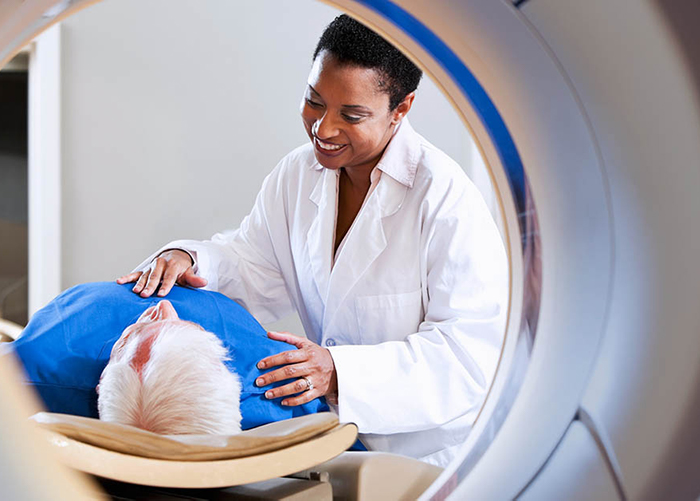
Medical imaging can detect and diagnose diseases at its earliest, most treatable stages and guides physicians and patients in determining the most appropriate and effective care. A study from the American Cancer Society demonstrated that increased use of medical imaging is directly tied to increased life expectancy for Americans:
- The increased uptick of colonoscopy screenings has contributed to the decline in Colorectal cancer incidence rates during the past decade.
- Overall, female breast cancer death rates have been declining in the US, in large part, due to early detection by mammography screening and improvements in treatment. Digital mammography has improved sensitivity for women under the age of 50 and women with mammographically dense breasts.
- Focused ultrasound offers patients a faster recovery and a quicker return to normal activities with fewer side effects and can be used to treat serious conditions like prostate cancer, Parkinson’s disease, essential tremor and other life-altering conditions.
Improving Health Outcomes
In addition to early detection, medical imaging allows for more effective treatment of diseases. With imaging, physicians can identify where malignant cancers have spread in the body and monitor the effectiveness of chemotherapy to better target treatment.
- Early diagnosis can enable treatment that is generally more effective, less complex, and less expensive. Studies have shown that treatment for cancer patients who have been diagnosed early are 2 to 4 times less expensive compared to treating people diagnosed with cancer at more advanced stages.
- Cutting-edge medical innovations, like focused ultrasound, can provide non-invasive treatments, often in outpatient settings.